

Mentor allocation
A faculty mentor per student group monitors attendance, practical performance and wellbeing through the programme.

Academics · Industry exposure
Industrial training is a graded academic component, not an optional attachment. This page also covers the indicative academic calendar, the examination scheme, student support and answers to common academic questions. Confirm current arrangements with UIHMT.
Explore industrial training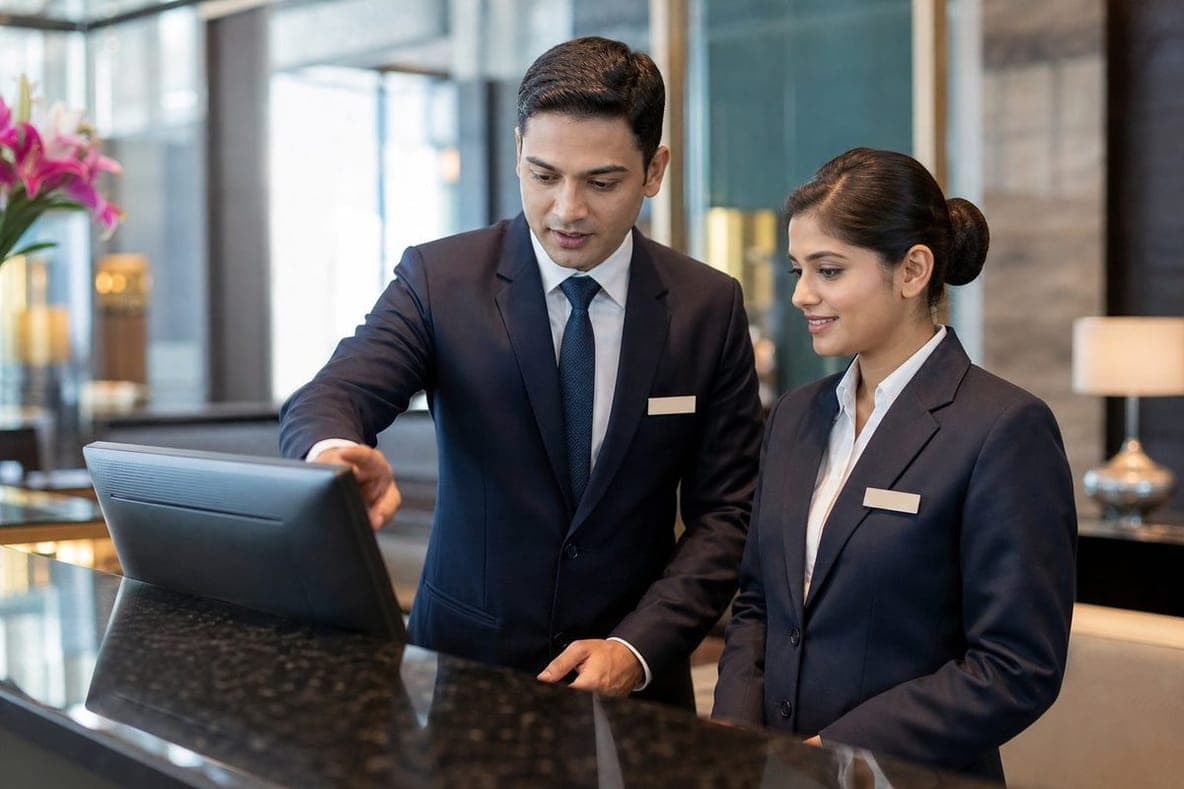
Industry exposure
Industrial training is a graded academic component, not an optional attachment. Students are placed in operating departments with written duties, supervised by an industry mentor and assessed jointly by the property and the college.
Hotel kitchens and service outlets, resorts, banquet and event companies, airline and institutional catering, travel and tour operations, cruise lines where eligible.
Mentor report, weekly logbook, college supervisor visit, and a documented end-of-training presentation by the student.
Confirm training arrangements
Please ask UIHMT about training duration, paid or unpaid status, any stipend policy and how students are supervised during placements.

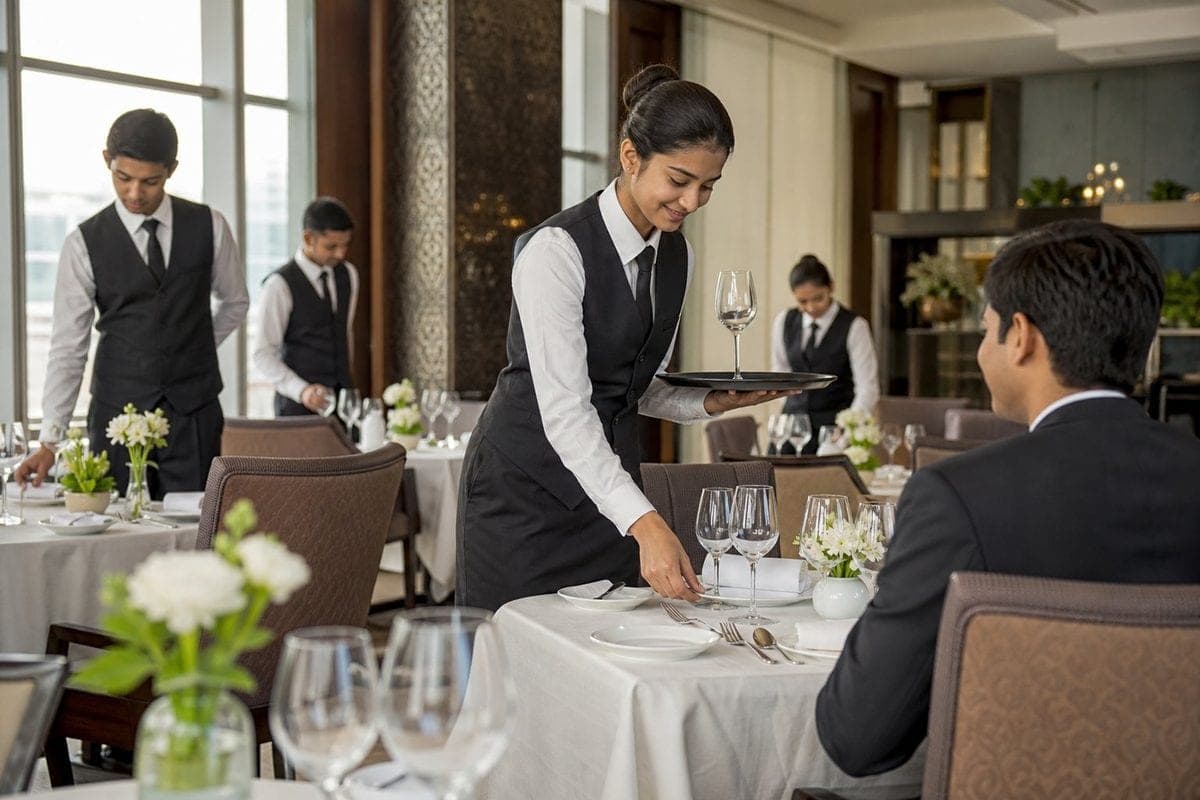
Support is structured rather than ad hoc: every student has a mentor, every practical module has revision opportunities, and every academic concern has a documented route to resolution.
A faculty mentor per student group monitors attendance, practical performance and wellbeing through the programme.

Students who need more repetition get scheduled lab time to reach the required standard rather than being graded out of it.

Spoken English, hospitality vocabulary and guest communication sessions run through the year for students who need them.

Confidential counselling referral, an anti-harassment policy with a named committee, and a defined grievance escalation path.

Library lending, reference access and computer laboratory time for project and assignment work.

Guidance on the fee schedule, instalment options, scholarship eligibility and government scholarship applications.
Academic FAQ
Practical training is the core of the curriculum. Students rotate through the training kitchen, bakery lab, restaurant lab, front office lab and housekeeping lab, and every long programme includes a supervised industrial training period.
Industrial training is a full-time placement period in a hotel, restaurant, catering unit or tourism business, assessed as part of the programme. It is compulsory on the degree and diploma programmes: it is where classroom learning is tested against commercial standards.
The degree programmes include common foundation semesters, so students gain exposure before choosing final-year electives. Specialised diplomas are fixed from the start. Please confirm current transfer and specialisation rules with UIHMT.
The reference describes craft certificates such as bakery and confectionery. Please confirm current availability, schedules and eligibility with UIHMT.
For degree programmes, a 10+2 pass in any stream from a recognised board. Diplomas accept 10+2 in any stream, and short craft certificates accept a 10th pass. Exact requirements for each programme are listed on the Courses page and repeated in the eligibility table on the Admissions page.
With the exception of programmes that specifically ask for Mathematics or Science at 10+2, hospitality and tourism programmes are open to students from all streams — arts, commerce, science and vocational streams are all welcome.